
HSE’s 2025/26 data shows 126 workers killed in work-related accidents — and the long-term rate of decline is slowing
DEVON, UK. July 15th, 2026 – A Devon-based software business is urging construction, housebuilding and utility organisations to adopt a more proactive, technology-enabled approach to risk management following the release of the Health and Safety Executive’s provisional fatal injury statistics for 2025/26.
The HSE data, published on 1 July 2026, reveals that 126 workers were killed in work-related accidents during the year, alongside 104 members of the public. While the long-term trend in workplace fatalities shows improvement, the rate of decline has slowed in recent years — suggesting that traditional approaches to safety management may be reaching their limits.
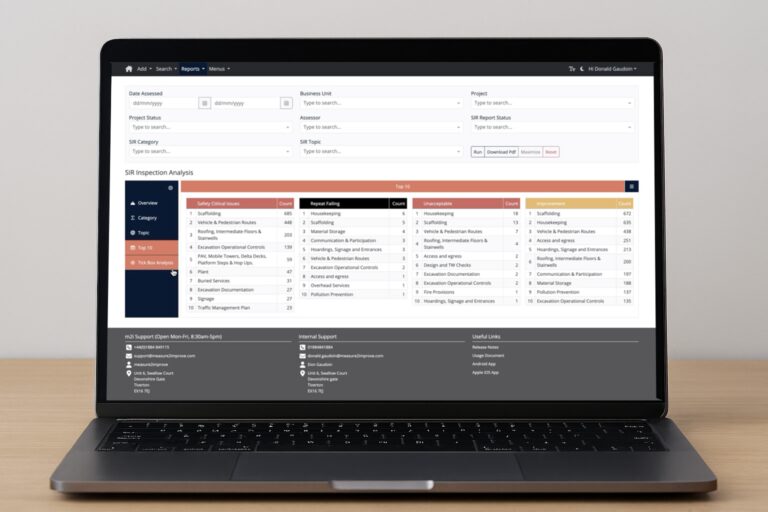
measure2improve, the developer of the m2i.SHEQ integrated safety, health, environment and quality management platform, believes this is a warning to industries where the decline in fatalities has slowed.
Richard Howard, Managing Director of measure2improve, said: “Every workplace fatality is a tragedy, and behind every statistic is a family and a community affected. While it’s encouraging that long-term trends have moved in the right direction, the fact that progress is stalling should be a wake-up call for every organisation.
“Too many businesses still rely on spreadsheets, paper forms and disconnected systems to manage safety. That approach makes it harder to spot emerging risks, follow through on actions, and learn from incidents and near misses. If we want to continue driving fatalities down, we need to embrace technology that makes proactive safety management not just possible, but sustainable.
“A modern SHEQ platform gives organisations the visibility, consistency, and accountability they need to move beyond compliance and genuinely protect their people. The data is telling us that doing more of the same isn’t enough — it’s time for a smarter approach.
“The ONS reports that only 69% of UK firms use cloud-based systems, and HSE is increasingly highlighting the role of data and analytics in improving workplace safety. The question is no longer whether organisations should digitise – it’s whether their SHEQ processes are up to the job, because they can have access to real-time visibility and accountability but are too slow to embrace it.
“The options are there, and there are no excuses left not to use them.”
The company is calling on organisations across all sectors to review their current safety management practices and consider whether existing systems are truly fit for purpose. With workplace fatalities no longer declining at the rate they once were, the company believes the industry must embrace digital tools and data-driven approaches if further progress is to be made.