
STRICTLY EMBARGOED UNTIL 06:00 JUNE 2 2026
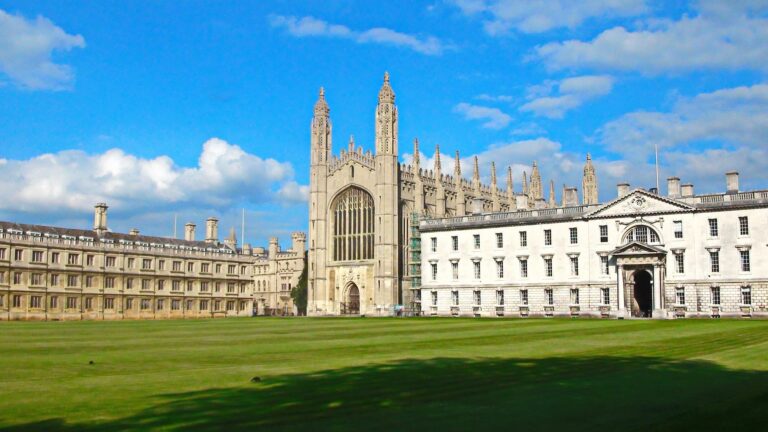
The University of Cambridge has retained its number one position in this year’s annual Complete University Guide rankings.
CAMBRIDGE, UK. June 2nd, 2026 – The University of Cambridge has retained the number one position in this year’s annual Complete University Guide rankings. The University of Oxford, the London School of Economics and Political Science, the University of St Andrews and Imperial College London, which has climbed one place from sixth to fifth, complete the top five.
In the top ten, the University of Warwick climbs two places to seventh, achieving its best result in over ten years; it last ranked seventh in the 2016 league tables.
There is notable movement further down the table too. The University of Dundee makes the biggest leap of any institution in the top 30 by climbing 14 spots from last year to 25th place, and in the top 50, Brunel University goes up 19 places to 48th and the University of Suffolk is up 11 to 44th. The highest climber in the UK is the University of East London, with a rise in 30 places in the overall league table.
The rankings show that more students than ever can now aspire to a place at a leading university. Among the top 40, 29 universities have increased the proportion of UK undergraduates they recruit, and 27 of those have seen entry requirements become more flexible – a shift that reflects a changing market and creates additional opportunity for UK applicants.
After a dip in last year’s data, the proportion of students progressing from the first year of their course to their second has reached 91.1% this year, up from 89.7% last year. This suggests that universities’ investment in student support is having a positive impact. However, this is still below the 92.2% recorded in the 2025 tables.
Across the sector, on average 72% of graduates have successfully transitioned into graduate-level or professional roles, or are pursuing postgraduate education, just over a year after graduation. However, the rankings reveal several universities that aren’t at the top of the league tables deliver outstanding results for their students. With entry standards showing they accept a broad range of entrants, they excel in the proportion of graduates who go on to professional or graduate-level employment. These include Harper Adams University, the University of Buckingham, St Mary’s University, Twickenham, Bournemouth University and Aston University.
The most popular subjects remain consistent in terms of student numbers. Business and Management Studies, Nursing and Midwifery and Computer Science continue to dominate the top three, a pattern that has remained largely stable for five to 10 years. There are some small shifts in this year’s data with Law moving to fourth place from fifth last year and Psychology now in fifth place from fourth last year. Sociology and Drama, Dance and Cinematics have each risen one place to seventh and eighth place respectively.

The University of St Andrews maintains the prestige of the highest ranked university in Scotland at 4th place in the UK, while Cardiff University remains top of the table for Wales in 27th place overall and Queen’s University Belfast is the highest-ranking institution in Northern Ireland in 23rd place.
Each year, the Complete University Guide publishes its UK university and subject league tables to help prospective students make informed choices about their future, including those weighing up late decisions or exploring Clearing options.
Regional tables are also available, making it easier for students to find the right university close to home. This release follows last month’s Whatuni Student Choice Awards, where students themselves recognised and celebrated outstanding universities across a range of categories nationwide.
Professor Amanda Chetwynd, Chair of the Complete University Guide Advisory Board, said: “Congratulations to the University of Cambridge for once again claiming the top position in this year’s Complete University Guide rankings. Our methodology draws on a range of trusted, independent measures that reflect what students care most about – teaching quality, student satisfaction and graduate outcomes.
“This year’s rankings show that the opportunity to attend a prestigious university has never been more accessible. The movement we are seeing in entry requirements across the top 40 is a broadening of access and that is something to welcome. Students who might previously have ruled out certain universities should look again. The right university is not always the one with the highest entry requirements; it is the one that is the best fit for you, your ambitions and your future.”
Simon Emmett, Chief Executive Officer, IDP UK, said: “What stands out in this year’s data is the breadth of opportunity across UK higher education. The fact that more universities in the top 40 are welcoming a wider range of students, while maintaining strong graduate outcomes, is a genuine positive for prospective applicants.
“It is also encouraging to see student continuation rates improve. Universities have clearly been investing in the support students need to succeed, and that is showing in the data. There is still progress to be made, but the direction of travel is the right one.”
ENDS