
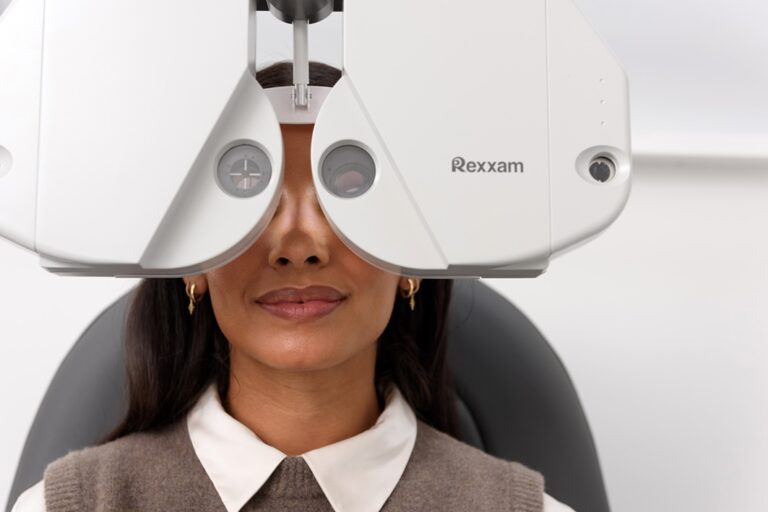
BATH, UK. September 21st, 2026 – New research by the charity Eye Health UK for National Eye Health Week [21-27 September] reveals that 14.5 million Brits are missing routine sight tests, potentially delaying the detection of sight-threatening eye conditions and hidden general health issues.[1]
The research highlights a worrying post-pandemic rise in the number of people skipping routine eye tests (up from 14 million in 2019),[2],[3] a trend driven by healthcare costs, systemic inequities and lack of awareness.
David Cartwright chair of Eye Health UK warns: “Neglecting routine sight testing could lead to a spike in advanced-stage diagnoses, overloading an already stretched ophthalmology sector where outpatient-appointments are experiencing unprecedented and unsustainable growth.[4]”
David continues: “Half of sight loss in the UK is avoidable. Increasing uptake of eye tests is vital to turn the tide of unnecessary vision impairment and improve overall population health. As well as identifying vision problems, eye tests can detect a range of other conditions including high blood pressure (hypertension), raised cholesterol, heart disease, brain tumours and risk of stroke.”
Four in ten (40%) who skip routine sight tests say they do so because their ‘eyes are fine’, however eye tests can detect sight-threatening conditions, such as glaucoma – one of the UK’s leading causes of blindness, years before a person notices a change in their vision.
Early detection of glaucoma is critical and can slow progression of the disease by up to 50 per cent, preserving a person’s vision and independence. Catching glaucoma early can also reduce long-term treatment burden and costs. Managing early-stage glaucoma is often as straight-forward as adopting some simple lifestyle changes and using prescription eye drops.
One in six surveyed said worries about cost prevented them from having regular eye tests, despite more than 34 million people in the UK being entitled to free sight tests on the NHS.
Awareness about entitlement to NHS eye care (sight tests and help with the costs of prescription eyewear) was lowest amongst those who didn’t attend routine eye tests (59%) compared to those who have had a sight test in the last two years, as recommended (26%).
NHS-funded provision means eye care services are accessible for all. Free sight tests and optical vouchers are available for many, including those on low incomes and people at increased risk of poor eye health due to age or medical history. People unable to leave home unaided are entitled to free domiciliary (at home) eye tests; whilst many local areas commission translation and interpretation services ensuring a patient’s language or communication skills are not barriers to eye care.
High-street optometrists play a crucial role in improving health opportunities for all. As well as caring for the nation’s eye health and preventing avoidable sight loss[5], optometrists can direct people to get the help they need for a wide-range of illnesses, including 400,000 adults in the UK estimated to be living with undiagnosed heart failure and 88,000 people living with undetected brain tumours[6].”
Simon Fletcher (67), a retired senior IT manager, from Macclesfield Cheshire knows only too well the important role optometrists play in keeping Britain healthy after a routine eye test turned out to be a potential life-saver when it revealed a hidden risk of a ‘widow-maker’ heart attack. Read Simon’s story here.
A significant minority (6.4%), of those who haven’t had a recent sight test say they’re worried there might be ‘something wrong with their eyes’.
David Cartwright comments: “I’d urge people to not put off having their eyes checked. Early detection of problems with your sight or general health helps ensure the best possible treatment outcomes. High-street optical practices should be the first point of contact for any concerns you have about the health of your eyes. Many now offer a range of NHS primary care services, including appointments for urgent and minor eye conditions. Ask your local practice for information.”
For more about looking after your eyes and National Eye Health Week [21–27 September] visit visionmatters.org.uk.
ENDS