
REIGATE, UK. March 23rd, 2026 — A new initiative led by autistic people and people with learning disabilities which aims to ensure everyone can use AI tools like ChatGPT and Copilot safely is set to launch.
The initiative, called AI CAN, is an innovative digital hub and peer-led training programme developed by The Pro-Active Community — a charity led by autistic people and people with learning disabilities — with support from Active Prospects (a Surrey-based charitable care provider) and researchers from the University of Surrey. The project is funded by the Department for Science, Innovation and Technology (DSIT).
AI CAN is designed to help autistic people and people with learning disabilities understand and safely use generative AI tools such as ChatGPT and Copilot for everyday tasks — from writing emails and planning meals to understanding online information and creating easy-read content.
The programme places a strong emphasis on online safety, helping people understand how to use AI responsibly, recognise risks and protect their personal information.
Training is also delivered to support workers, helping them understand how generative AI can be used safely and responsibly to support the people they work with in everyday online tasks.
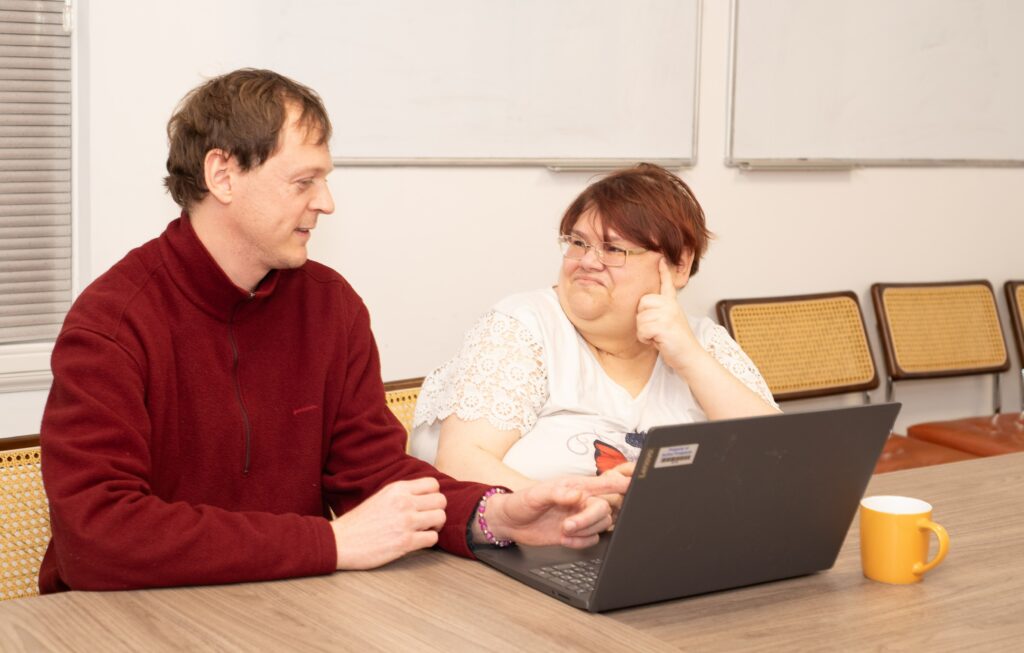
The project was inspired by Matt Leadbeater, a marketing and fundraising assistant who has a learning disability. Discovering artificial intelligence transformed the way he communicates and manages everyday tasks.
Matt said: “I was juggling emails, designing content and coming up with fundraising ideas. When I tried using AI for the first time, something clicked.
“The words were still mine, but AI helped me shape them clearly and confidently. Before long, people were responding more and my confidence grew.”
What began as a practical tool at work quickly became something much more significant.
“Bit by bit, AI wasn’t just helping me work better – it was helping me live more independently,” Matt added. “If AI can help me, it can help others too.”
Early research carried out as part of the project shows strong demand for this type of training. The evaluation found that 93% of participants said they wanted support or training to help them learn how to use artificial intelligence safely and confidently.
Across both groups, the research found that the biggest barriers were lack of knowledge and understanding, rather than a lack of interest in AI.
“Technology should work for everyone,” said a spokesperson from The Pro-Active Community. “By co-designing this programme with people who have lived experience, we are making sure AI is accessible, understandable and useful in everyday life.”
AI CAN was developed through a collaboration between the Centre for Vision, Speech and Signal Processing (University of Surrey), Active Prospects and The Pro-Active Community, and is funded by the Department for Science, Innovation and Technology.
The AI CAN Digital Hub will officially launch on 25 March 2026, bringing together partners, participants and stakeholders to celebrate the project and share learning from its development.
As artificial intelligence continues to reshape the way people communicate, work and access information, the project aims to ensure autistic people and people with learning disabilities are not left behind in the digital future.
ENDS